What's next in hospitality design? Three masters of style ruminate about big gestures, Yves Klein blue and emotional connection.
Hong Kong, London, New York
Although each is remarkably different from the others, the Upper House Hong Kong, The Breakers Palm Beach and New York's Crosby Street Hotel are all iconic - and all share one thing in common: exquisitely memorable style. It takes a masterful point of view to create an icon (and to become one yourself as a designer). The creative visionaries behind these properties and so many others around the world reveal what excites them right now and what they see in the future for the world's best luxury hotels, restaurants, cruise ships and beyond.
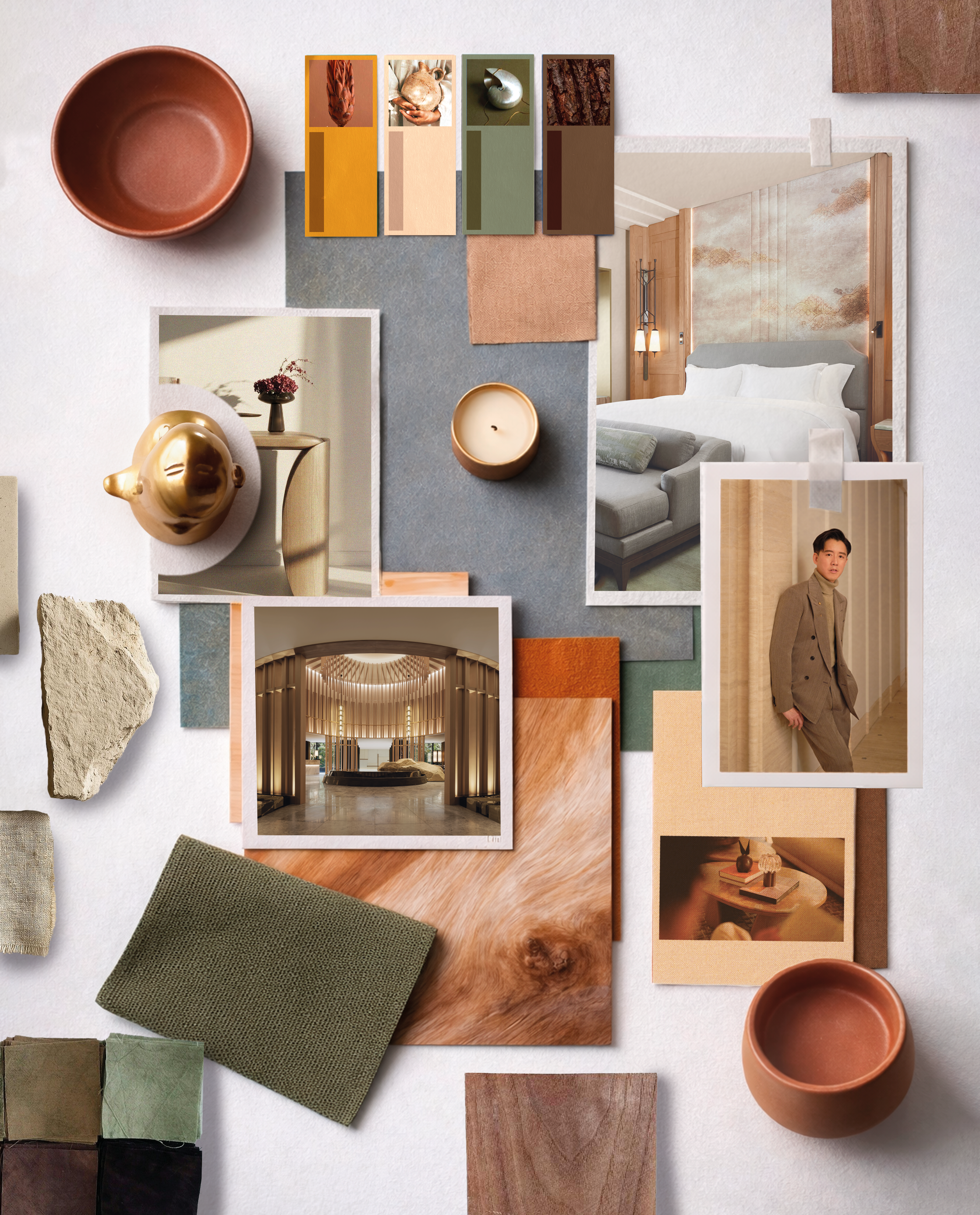
André Fu
THE KEEPER OF CALM
In very short order, the Hong Kong-based namesake of Andre Fu Studio and Andre Fu Living has become one of Asia's most sought-after hospitality architect/designers. Past projects include the Upper House Hong Kong, Hotel The Mitsui Kyoto, Capella Taipei, The Fullerton Bay Hotel Singapore, Waldorf Astoria Osaka and more. Kit Kemp
Your design sensibility?
Relaxed luxury. My work is quite contextual. I tie it with the locality, but there is a subtle sense of comfort and elegance. For Upper House Hong Kong, my first commission, the brief was comfort and calm; subconsciously, that gave me a lot of insight. That DNA remains the key notion in my work.
Currently in progress?
A full re-fab of Four Seasons Hotel Tokyo at Marunouchi, then Upper House Shenzhen.
How do you work?
It's rarely literal. I'm more interested in emotional connection. At Capella Taipei, for example, there's a certain feeling of pace that's orchestrated and curated from the moment the doors open. You see the first space, go through the tunnel, see the other vista. Everything slowly unveils.
Favorite materials?
I've always used a lot of timber. Pure, beautiful stones. And a lot of bronze - that's my staple.
Your colors of the moment?
Mineral blue and sage greens. I love accents of terra-cotta and mustard yellow. I pick colors from fashion collections, as well. I'm always interested in how certain colors represent a particular city. I've started working on projects in Seoul; what resonates there are emerald green and cobalt, or Yves Klein blue.
Fashion faves?
Matthieu Blazy [at] Chanel and Jonathan Anderson for Dior. What I do; there are similarities.
Product obsession?
A category that has been increasingly, crazily interesting for me to design is portable lights. I now have more than a dozen. It represents how technology can provoke a sense of freedom in how we use a light.
What's next in hospitality design?
When everyone is trying to be different and one of a kind, it's doing something that is still authentic - not putting on the newest material or doing funny things with sustainability. You don't have to tell; you don't have to explain: When you're there, you know.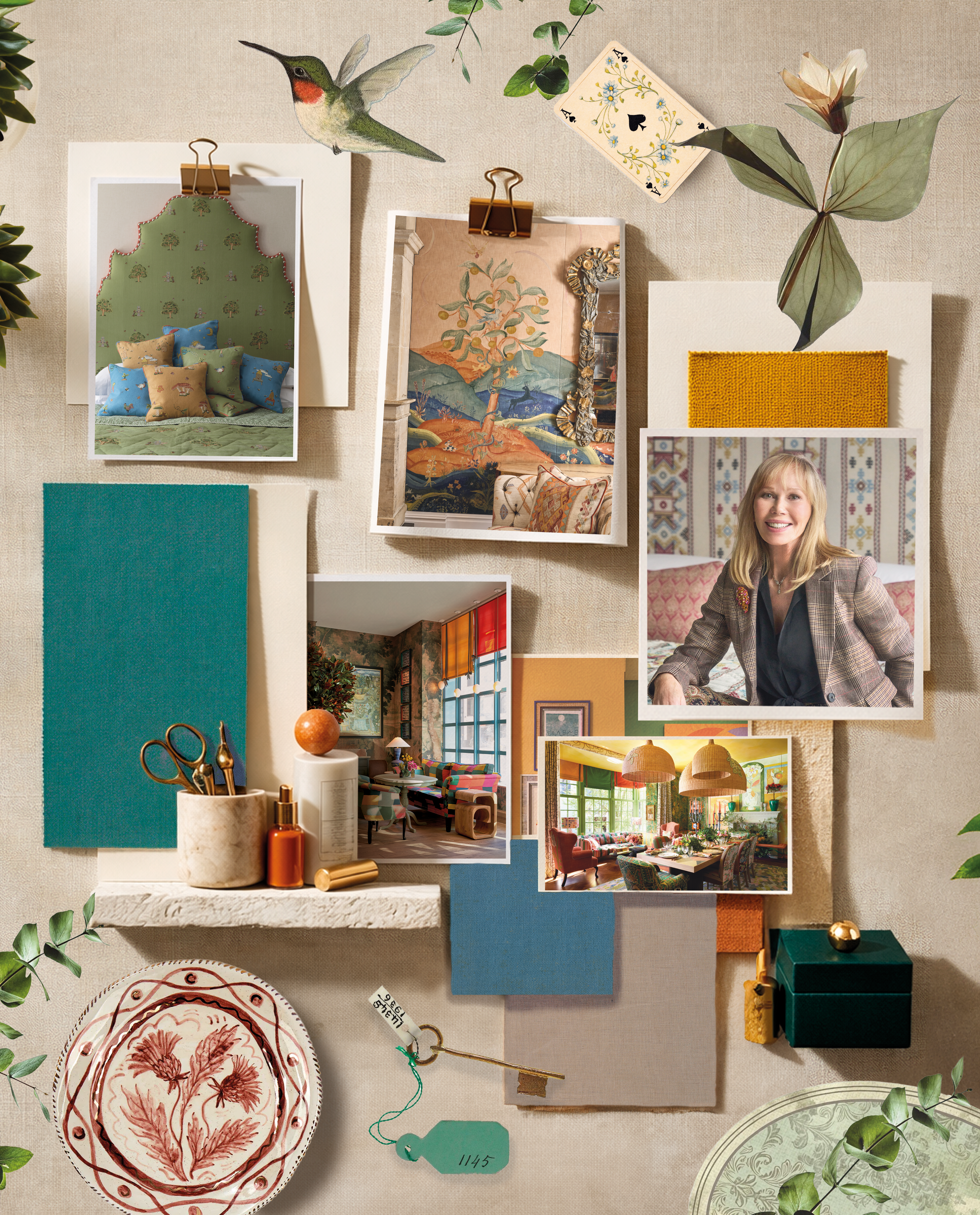
FAIRY GODMOTHER OF PANACHE
She's the style guru behind London's Kit Kemp Design Studio and cofounder (with husband Tim Kemp) of the always-distinctive Firmdale Hotels. She designed every one of the 11 hotels currently in the Firmdale portfolio, starting with 1985's Dorset Square Hotel in Marylebone, and continuing on to her latest showcase in Tribeca: the Warren Street Hotel.
Currently in progress?
Two more hotels in London: one in a listed historic building near the British Museum with lots of character, and a new build in Shoreditch. Plus, my new book, Kit Kemp: Design Stories, just came out.
How do you work?
The five Cs: Every room should have color, comfort, craft, character and curation. I might also add confidence and cost.
Favorite part of conceiving a hotel?
It's finding new craftspeople. It's loving hands, really. We're interested in craft, wonderful textiles and things made by hand.
Your colors of the moment?
I call them my yoga colors: mustardy, cinnamony, indigo, terra-cotta, ochre. We like to add something like a spark - a really bright marigold orange, a really sharp cardinal red or a Yves Klein blue.
Design motto?
In any room, there's always got to be something that makes you smile.
Artists to watch?
Herm?s and Loro Piana for the simplicity - a timeless aesthetic that is always excellently executed in the details.
Your personal evolution 40 years in?
It's amazing how it goes in a circle: Things you started off loving in the very beginning, they suddenly re-evolve. There's a much cleaner look now, a much stronger look. We try to stay true to one view, which means it's going to be viewed like Marmite - someone's going to love it, or they're going to hate it. But I'd rather that happen than to have no feeling at all.
Most inspiring destinations?
India, Guatemala, Mexico, Argentina. I'm dying to go to Budapest and Transylvania.
Your 2031 hotel-trend prediction?
Getting rid of every bit of wiring. And hotels with more of a salon feel. Also, people want to learn. Our workshops and book salons are very much a part of what we do. We might have Elizabeth Day doing a book talk or SJ Axelby helping you do an illustration of a room. Hotels will feel much more part of the community, and guests will feel it's added something to their stay.
Alessia Genova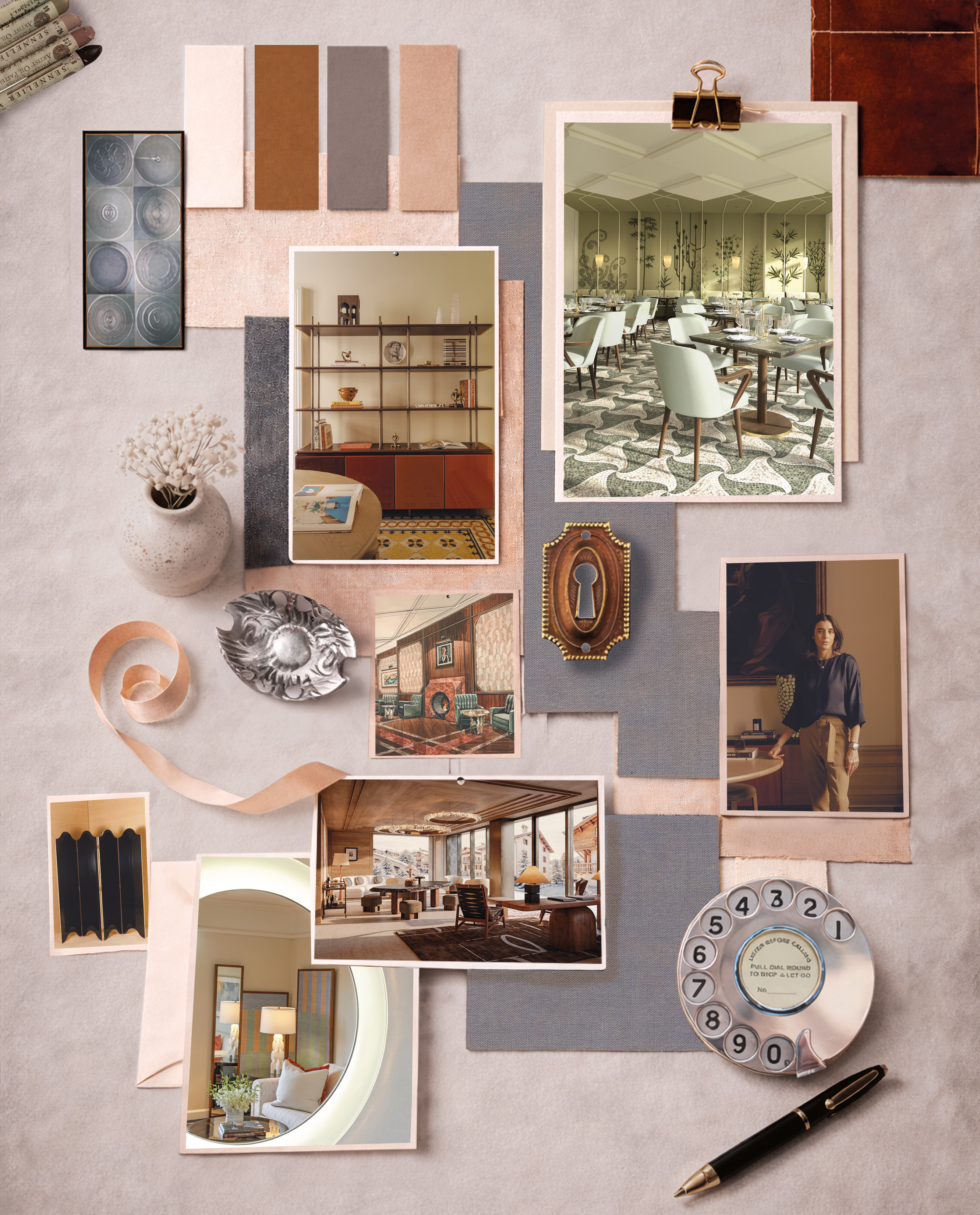
DOYENNE OF THE DETAILS
After 15 years as a designer, and then partner, at Tihany Design, Alessia Genova became principal of the legendary New York firm in 2024 when founder Adam Tihany retired. Past projects include Mandarin Oriental Bosphorus in Istanbul, Seabourn Pursuit, the just-completed The Breakers Palm Beach and many more.
Currently in progress?
Zero Bond and Sartiano's restaurants at Wynn Las Vegas, then our first mountain resort, Hotel Bellevue Cortina d'Ampezzo in the Italian Alps later this year. Plus: two hotels in Rome.
How has Tihany Design evolved under your stewardship?
My approach is more subtle and quietly confident. It's more layered, a bit more emotional, but still place-driven.
How do you work?
It's an architectural approach. For me, it's about proportion and intention on detailing, which is the essence of Italian design. I'm always asking the team, "What makes it special?" It can't be pretty and forgettable. There should be at least one thing people will remember. These small moments become the soul of the hotel.
Inspiring destinations?
I am very attached to Milano - the super-detailed gates, the flooring. As an Italian, I don't want to say France, but I resonate with the richness of craftsmanship there, too. I also constantly look to Tokyo - that rigorous simplicity of line.
Any artists you're watching?
Richard Serra speaks to my approach of sculptural, big gestures and metallic elements. Also: Etienne Moyat's very sculptural wooden pieces.
Fashion faves?
Herm?s and Loro Piana for the simplicity - a timeless aesthetic that is always excellently executed in the details.
Current furniture fascination?
I almost want to put a paravent screen in every project.
The space you most love designing?
The guest room. It's intimate and personal and gives me opportunity - because of the scale - to really curate the details and give it more character. The minibar, these days, can be highly designed.
Top textures?
I'm gravitating toward tactility: plasters that are more three-dimensional and hammered metal. In Italian, we say "artigianale," or craft.
Your colors of the moment?
Deep neutral colors like warm taupe, tobacco and soft charcoal - I like cashmere colors. And recently, I've been attracted to rich wine reds.
What do you see ahead?
Quiet luxury, still. But instead of the usual stereotypically "luxury" materials, I think craftsmanship and art will continue to have a more important role.